Insense
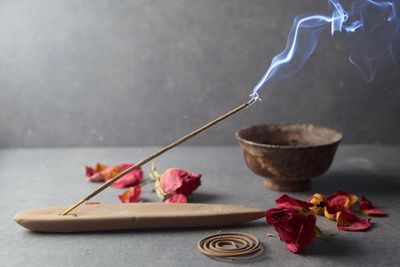
From Sacred Altars to Modern Homes: The History, Craft, and Utility of Incense
For over five thousand years, incense has served as one of humanity’s primary tools for spiritual ritual, air purification, medicine, and emotional well-being. Derived from the Latin word incendere (meaning "to burn"), incense consists of aromatic plant materials mixed with essential oils and binders that release fragrant smoke when burned.
1. Ancient Origins: The Birth of Aromatic Smoke
The practice of burning aromatic woods, resins, and herbs emerged independently across several ancient civilizations, driven by both religious devotion and practical hygiene:
- Resins of the Gods
3000 BCE – Ancient Egypt & Mesopotamia
Ancient Egyptians burned frankincense, myrrh, and kyphi (a complex blend of honey, wine, raisins, and resins) daily in temples to honor the sun god Ra. Incense smoke was believed to carry prayers directly to the heavens and was extensively used in mummification to preserve bodies and repel disease. - Herbal & Medicinal Formulations
2000 BCE – Indus Valley & Ancient China
In ancient India, early Vedic texts documented the use of aromatic woods like Sandalwood and Cedar for sacred fires (Yajna) and Ayurvedic healing. Concurrently, in China, incense made from cassia, cinnamon, and star anise was burned to purify living spaces and cultivate harmony (Qi). - The Incense Trade Route
500 BCE – Greco-Roman & Silk Road Trade
Extensive trade networks—most notably the Incense Route across the Arabian Peninsula—transported rare frankincense and myrrh from Southern Arabia to the Mediterranean, making aromatics as valuable as gold.
2. Forms and Crafting: Direct-Burning vs. Indirect-Burning
The physical structure of incense evolved over centuries, leading to two distinct categories used worldwide today:
Types of Incense
│
┌─────────────────────────┴─────────────────────────â”
â–¼ â–¼
Direct-Burning (Combustible) Indirect-Burning (Non-Combustible)
(Contains built-in fuel source) (Requires an external heat source)
│ │
┌──────┴──────────────┠┌──────┴──────────────â”
â–¼ â–¼ â–¼ â–¼
Sticks & Cones Coils Resins Powders
(Bamboo core or (Spiral design for (Frankincense/Myrrh (Loose aromatic
pure pressed paste) extended burn time) on hot charcoal) wood shavings)
Common Traditional Materials
- Aromatic Resins: Sap harvested from specific trees, including Frankincense (Boswellia), Myrrh (Commiphora), Copal, and Dragon's Blood.
- Fragrant Woods: Finely ground Sandalwood, Agarwood (Oudh), Cedar, and Palo Santo.
- Botanicals & Spices: Lavender, Rose petals, Patchouli, Star Anise, Clove, and Vetiver.
- Natural Binders: Makko powder (derived from the bark of the Tabebuia tree) or Jiggit powder, which act as odorless water-soluble glues that hold the ingredients together and allow smooth, slow burning.
3. Cultural and Religious Traditions
Incense plays a vital role across major world faiths and cultural practices:
Incense in Global Sacred Traditions
Hinduism (Agarbatti) Buddhism (KÅdÅ / Incense) Christianity & Judaism
┌─────────────────────────┠┌─────────────────────────┠┌─────────────────────────â”
│ • Used in daily Puja │ │ • Represents impermanence│ │ • Burned in Thuribles │
│ • Represents devotion │ │ • Used in meditation │ │ • Represents prayers │
│ and purification │ │ and Japanese KÅdŠ│ │ rising to God │
└─────────────────────────┘ └─────────────────────────┘ └─────────────────────────┘
- Hinduism (Puja): Burning agarbatti (incense sticks) is an essential element of daily worship, cleansing the home and creating a sacred atmosphere for prayer.
- Buddhism & Taoism: Incense sticks are offered at altars to represent the fleeting nature of life (as the stick burns down into ash) and to center the mind during meditation.
- Christianity: In Orthodox and Catholic liturgies, burning frankincense inside a swinging vessel (thurible or censer) symbolizes the prayers of the faithful ascending toward God (Psalm 141:2).
4. Modern Uses: Aromatherapy, Focus, and Home Atmosphere
Beyond spiritual traditions, incense remains widely popular in modern homes for practical and psychological benefits:
- Stress Relief and Relaxation: Aromatic compounds in ingredients like Lavender, Sandalwood, and Frankincense stimulate the limbic system in the brain, helping reduce stress and promote calm.
- Meditation & Focus Enhancement: Burning incense provides a visual focal point (the gentle drift of smoke) and a sensory cue that signals the brain to transition into a state of quiet concentration or deep study.
- Natural Air Freshening: Quality natural incense neutralizes household odors and leaves an earthy, calming scent in living spaces.
- Timekeeping: In ancient Japan and China, specially formulated "incense clocks" burned at uniform rates to measure hours and mark shifts in meditation sessions.
Summary of Incense Forms & Characteristics
Incense Type
Fuel / Burn Method
Common Ingredients
Primary Advantage
Resin / Tears
Placed on glowing charcoal disks
Frankincense, Myrrh, Copal
Extremely rich, authentic ancient aroma
Cored Sticks
Bamboo stick wrapped in aromatic paste
Sandalwood, Patchouli, Spices
Easy to light, minimal mess, widely available
Solid / Dhoop Sticks
Pure compressed paste without bamboo
Agarwood, Herbal blends
Clean burn with no woody undertone smoke
Incense Cones
Molded cone shape
Essential oils, Wood powders
Concentrated scent, works with backflow burners